
If
you should nevertheless have any questions or are interested in a
consultation session, we would of course be happy to serve you in
person.
Please contact us at the following numbers:
+91 93 13 63 93 73
Lalit Goyal
+91 98 99 92 34 97
Bhavik Goyal
WHICH FOLDING ROLLER IS THE RIGHT ONE FOR US? WHAT WOULD YOU RECOMMEND?
Since this question can only be answered in connection with your
specific form of utilisation, the following section contains information
regarding folding rollers in general, information regarding the
differences between the ‘Classic and ‘Extra Grip’ variants and
information regarding whether one should select a soft PU variant or a
hard PU variant.
WE WERE CONTENT WITH THE QUALITY AND DURABILITY OF OUR PREVIOUS FOLDING ROLLERS.
HOW CAN I DETERMINE THE TYPE OF ROLLER?
WHICH TYPE OF ROLLER IS CURRENTLY INCLUDED IN MY MACHINE?
If you were satisfied with the fold-quality and the durability of the
folding rollers, we would recommend replacing the folding rollers with
the same version. To identify the version, please remove the upper
folding pocket and note down the type of the folding roller.
There
are two different types of folding rollers. From an optical point of
view, you can differentiate between the two types as follows:
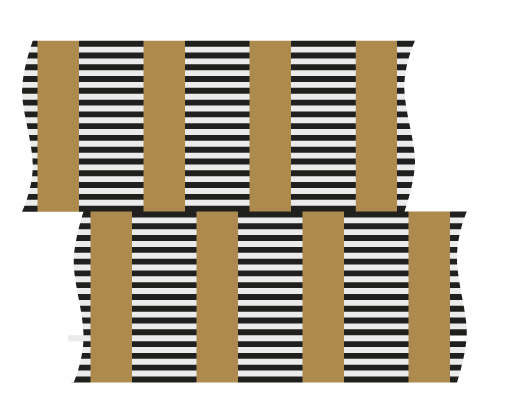
Classic FOLDING ROLLERS:
The knurled metallic part intersects on an upper and lower folding roller. This item contains a smaller amount of PU.
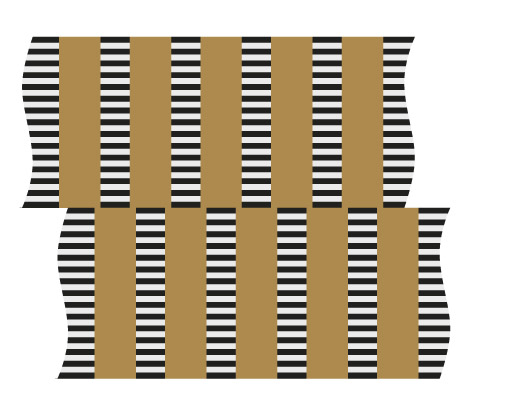
Extra Grip FOLDING ROLLERS:
The PU ring intersects on an upper and lower folding roller. This item contains a smaller amount of steel.
WE HAVE BEEN USING CLASSIC FOLDING ROLLERS.WHAT IS THE DIFFERENCE BETWEEN THIS ITEM AND AN EXTRA GRIP FOLDING ROLLER?
Classic folding rollers are time-proven and inexpensive. On account
of the low degree of wear and tear suffered by the polyurethane rings,
they last for a particularly long period of time.
Extra Grip
folding rollers contain about 30% more polyurethane rings. This ensures
that there is no overlapping of the steel segments. The benefits of
Extra Grip folding rollers: A higher degree of folding accuracy, a lack
of markings on sensitive papers and a low degree of static charge.
WHICH POLYURETHANE RINGS ARE PRESENT ON MY FOLDING ROLLER?
Both types of folding rollers (Classic and Extra Grip) can be equipped with polyurethane rings made of soft PU or hard PU.
Soft PU can be spotted based on the following factors:
- ring made of foamed material
- relatively soft
- can easily be pressed with the finger
- colour: yellowish beige, and it becomes light brown
Hard PU can be spotted based on the following factors:
- ring is made of polyurethane
- relatively hard rubber ring
- can only be pressed with the fingernail
- colour: Natural colours, and it becomes a range of dark brown to black
WHAT IS THE DIFFERENCE BETWEEN SOFT PU AND HARD PU?
Compared to hard PU, soft PU has a higher projection vis-à-vis the
steel. The material is pressed when the paper is being transported. It
touches the paper along an entire surface, and not just at a single
point. Soft PU has a better grip. It is easier to adjust and it folds in
a more precise manner. However, it wears out a lot faster than hard PU.
We
would advise against the use of soft PU if the item is to be used in
conjunction with glue, or if the situation involves freshly-printed
products, since it is very difficult to clean the spongy and foamed
material. Under such circumstances, hard PU would be significantly more
advantageous.
Hard PU has a significantly higher life expectancy.
Compared to soft PU, the ring features a smaller projection vis-à-vis
the metal. This results in a significantly ‘sharper and flatter fold’,
in comparison with soft PU. This can, for example, be important in
situations involving multiple zigzag folds. Furthermore, in comparison
with soft PU, the hard PU folding roller does not tend to produce double
fold (e.g. if the situation involves letter folds or gate folds). This
is a result of the higher-level grip.
PRACTICAL TIP - SOFT AND HARD PU
Experience has shown us that when it comes to most 1.st folding
stations, the Extra Grip folding roller is used in conjunction with soft
PU. In such scenarios, it is usually necessary to perform the folding
operations in a very precise manner, and at a high speed. The secondary
stations usually deal with 4-fold, 8-fold or 16-fold paper thicknesses.
These items are then scored or perforated. This means that the operation
is slower. Under such circumstances, on account of the wear and tear,
one would tend to use hard PU, along with a Classic or Extra Grip
roller.
The secondary stations associated with K-machines (crossfold unit with knife) always use Classic rollers and hard PU.
A PRODUCT OVERVIEW THAT COVERS OUR FOLDING ROLLERS AND SEGMENT FOLDING ROLLERS CAN BE FOUND HERE
.